Some links on this page may be affiliate links
An image that preceded the role
Brigitte Bardot died on 28 December 2025
The image of Brigitte Bardot remains one of the most firmly embedded visual presences of the 20th century. It is difficult to separate the actress from the icon — the body from the frame, the role from the photograph. Bardot was not only a film protagonist, but a carrier of collective projections of freedom, sexuality, and femininity that far exceeded her time.
Her presence in cinema was never rooted in classical acting technique. It resembled, rather, a state of remaining within the image. The camera registered her; culture projected its desires onto her.

Cinema as a field of vision
The turning point came with And God Created Woman (1956), directed by Roger Vadim — not because of its narrative, but because of how Bardot was framed. Her body ceased to be subordinate to dramaturgy. It became an autonomous element of the image.
Later roles — with Godard, Clouzot, or Malle — reinforced this paradox: Bardot was simultaneously present and elusive. The camera did not attempt to explain her. It observed.
For contemporary viewers, her films now often function as archives of a past gaze. They are worth revisiting not only as film history, but as fragments of a reality untouched and unaltered by artificial intelligence — accessible, for example, through collected editions of classic films, such as the Brigitte Bardot film collection.
Photography: the face of an era
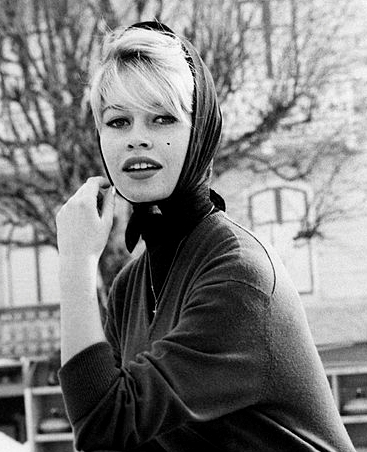
Alongside cinema, Bardot existed fully within photography. Portraits from film sets, press sessions, and private photographs collectively formed a coherent, instantly recognisable image. Loose hair, direct gaze, absence of distance from the camera. Photography did not document her roles — it extended them.
Through photographs, Bardot became an icon of mass imagination — reproduced, quoted, simplified. Her face functioned independently of film narratives, as a visual signifier of the 1950s and 1960s. Iconic photographs by Edward Quinn offer a particularly revealing insight into this process: Edward Quinn — Brigitte Bardot
The icon and the weight of being seen
It is worth remembering that Bardot withdrew from cinema at a very early stage. She stepped away from being an image at the height of her recognisability. This was a rare gesture — leaving not due to a lack of roles, but, as it seems, because of the weight of being constantly seen.
Her later life — animal rights activism, existence outside the film industry — radically altered her public presence. The icon ceased to be updated. She was sealed within the archive.
A legacy without resolution
Today, Bardot returns primarily as an image. Quoted in fashion, graphic design, and photography. At the same time, her figure remains difficult — burdened with controversies and statements that complicate any simplified narrative of an icon.
Perhaps it is precisely within this tension that her contemporary relevance lies. Not as a nostalgic fetish, but as a reflection on how culture produces and consumes icons.
Instead of a conclusion
Brigitte Bardot was not only an actress. She was a mass visual phenomenon. Her roles, photographs, and decision to leave cinema form a coherent story about the limits of visibility.
What remains is not a closed canon, but a constellation of images that still demand careful attention — free from sentimentality, yet also from simplification.
-
Edward Quinn — Brigitte Bardot — an archive by one of the most important chroniclers of Bardot’s private and professional life; images situated between cinema, fashion, and everyday intimacy.
-
Getty Images — Brigitte Bardot Archive — an extensive archive of film stills, portraits, and press photographs documenting multiple phases of her visual presence.
-
Brigitte Bardot: A Life in Pictures — The Guardian — a curated photographic overview of Bardot’s life and screen presence, framed within film history and visual culture.
-
Brigitte Bardot’s Most Iconic Beauty Looks — Vogue UK — a survey of Bardot’s image as a figure of style and aesthetic reference, highlighting her lasting influence on fashion and photography.
Further reading
If you are interested in the cinematic and photographic legacy of Brigitte Bardot, it is worth exploring books and albums dedicated to her image and film history available on Amazon — for example, within the category Brigitte Bardot books and films. Thank you for reading.