Some links on this site may be affiliate links
Daido Moriyama: Beauty in Imperfection
Daido Moriyama: The Raw Power of Urban Photography
Daido Moriyama stands as one of the most radical and influential figures in post-war photography. His images - harsh, grainy, and often visually unstable - reject clarity in favour of intensity. Born in Osaka in 1938, Moriyama began working in the early 1960s, during a period when Japan was undergoing rapid modernisation accompanied by political tension and cultural dislocation. This fractured social landscape became the foundation of his visual language.
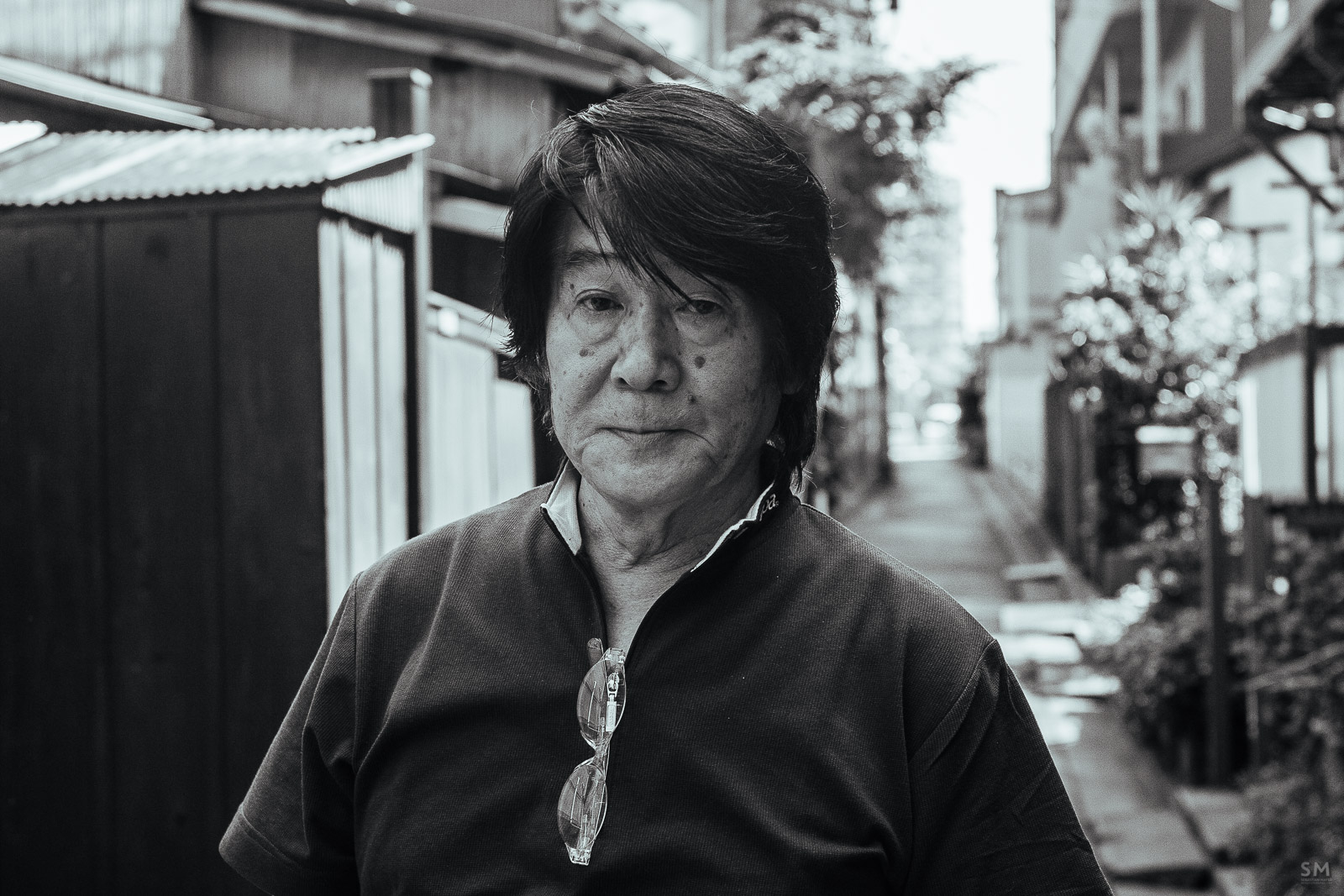
Portrait of Daido Moriyama. Photograph by Sebastian Mayer, CC BY-SA 3.0. Source

Closely associated with the avant-garde Provoke movement, Moriyama helped redefine photography as a medium of subjective experience rather than objective representation. His work does not explain the city - it collides with it. Streets, bodies, signage, and shadows appear fragmented, unstable, and charged with unease, mirroring the psychological condition of urban life in post-war Japan.
Early Life and the Path to Photography
Moriyama did not arrive at photography immediately. In his youth, he carried artistic aspirations, but it was the encounter with the photographic image that awakened something approaching a lifelong commitment. In 1959 he began studying photography in Osaka under Takeo Shiota and later Ken Domon - a documentary photographer associated with Magnum. The influence of Domon, along with the raw energy of 1960s New York photography, shaped the young Moriyama's fascination with the street as a visual arena.
In 1961 he moved to Tokyo. The capital was then a city in a state of constant reconstruction - not only architectural but social and psychological. This city, in its chaotic and unpredictable everydayness, became the central subject of his photography. As he once said, he was not interested in documenting the city - he was interested in becoming part of it.
The Provoke Years: A Radical Break
The turning point in Moriyama's career came when he joined the Provoke group. The magazine, which published only three issues (1968-1969), became a manifesto for a new way of thinking about photography. The slogan "are, bure, boke" (grainy, blurry, out of focus) was not an aesthetic choice for them - it was an ethical stance. They rejected clarity and documentary objectivity in favour of a subjective, bodily record of urban experience.
Moriyama brought to Provoke a visual radicalism that set him apart even from other members such as Takuma Nakahira and Yutaka Takanashi. His photographs from this period are the most extreme: burned out by light, blurred to the edge of legibility, framed as if the camera were an extension of his gaze rather than an observational tool. It was not about showing the world clearly - it was about showing it truthfully, which meant fragmentarily, uncertainly, charged with tension.
I have written about the Provoke movement in more detail in a separate article: Provoke: The Three Issues That Changed Photography. It covers the three issues of the magazine, its key members, and the philosophy of are-bure-boke in greater depth.
Historical and Philosophical Context
Moriyama's photography emerged from a moment of profound transformation. Japan's economic acceleration reshaped cities at an unprecedented pace, eroding traditional structures and producing a pervasive sense of alienation. Rather than documenting this change from a distance, Moriyama immersed himself in it. His images reflect disorientation, desire, loneliness, and rebellion - states of being rather than events.
Within the Provoke framework, photography was understood as an act of resistance against polished realism. Alongside figures such as Takuma Nakahira, Moriyama rejected technical perfection and narrative coherence. Instead, he pursued ambiguity, emotional immediacy, and visual noise. This approach culminated in Farewell Photography (1972), a work that deliberately dismantles photographic convention. Images appear overexposed, blurred, or nearly unreadable, pushing photography toward abstraction and questioning its authority as a truth-bearing medium. Each page of that book is an act of courage - the courage to show that an image can exist without the need to be legible.
Photographic Techniques and Equipment
Moriyama's technical choices are inseparable from his philosophy. High-contrast black-and-white film, aggressive grain, motion blur, and abrupt framing dominate his work. These elements produce images that feel unstable and visceral, as if captured in passing rather than composed.
Using simple, analog 35mm cameras, including the iconic compact Ricoh GR1s - lightweight, discreet, and equipped with a wide 28mm lens - reinforced this immediacy. The camera enabled fast, instinctive shooting, allowing Moriyama to react rather than plan. The resulting photographs feel impulsive, as though seized from the flow of the street.
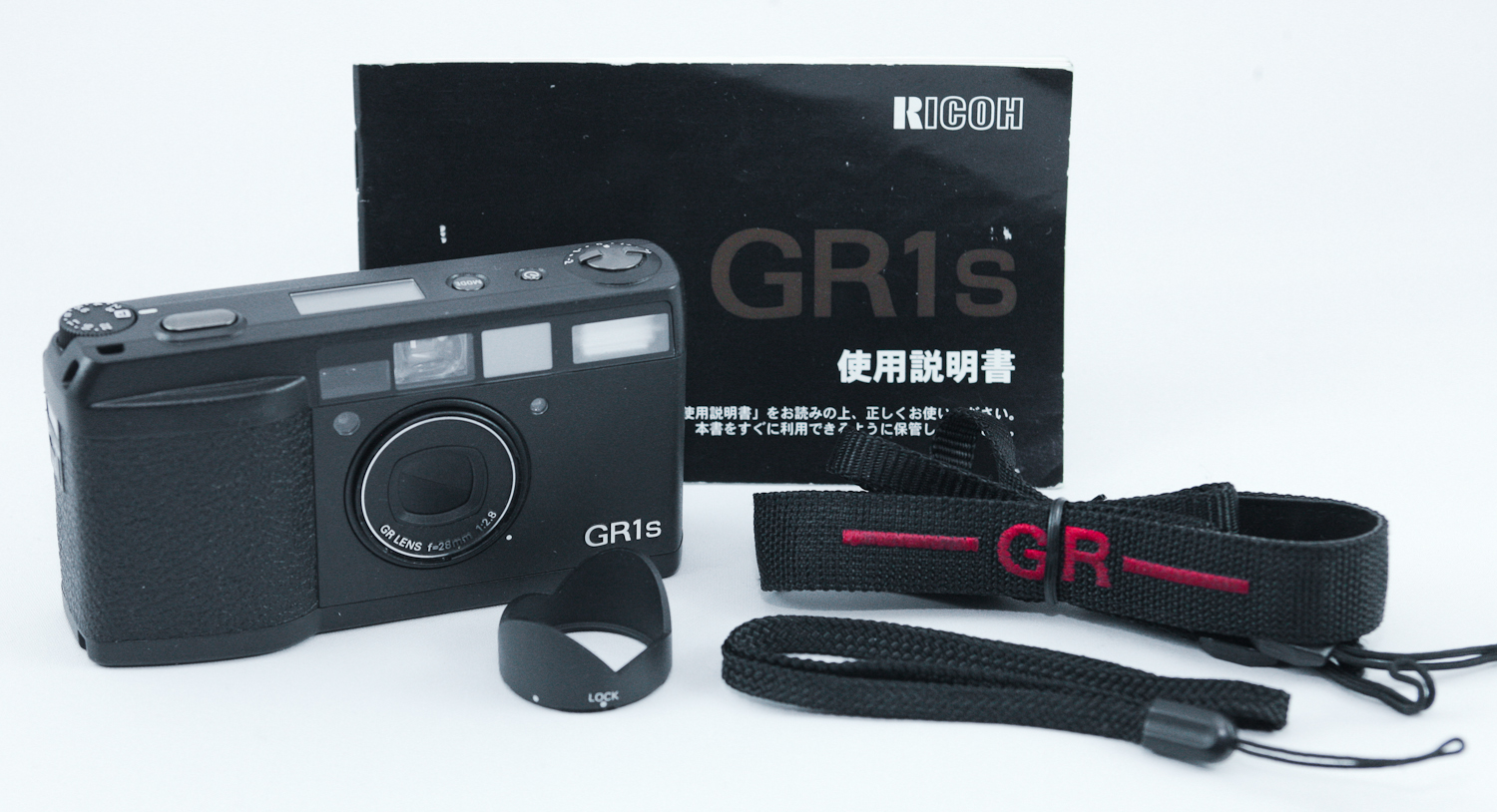
Ricoh GR1s DATE. Source
.jpg)
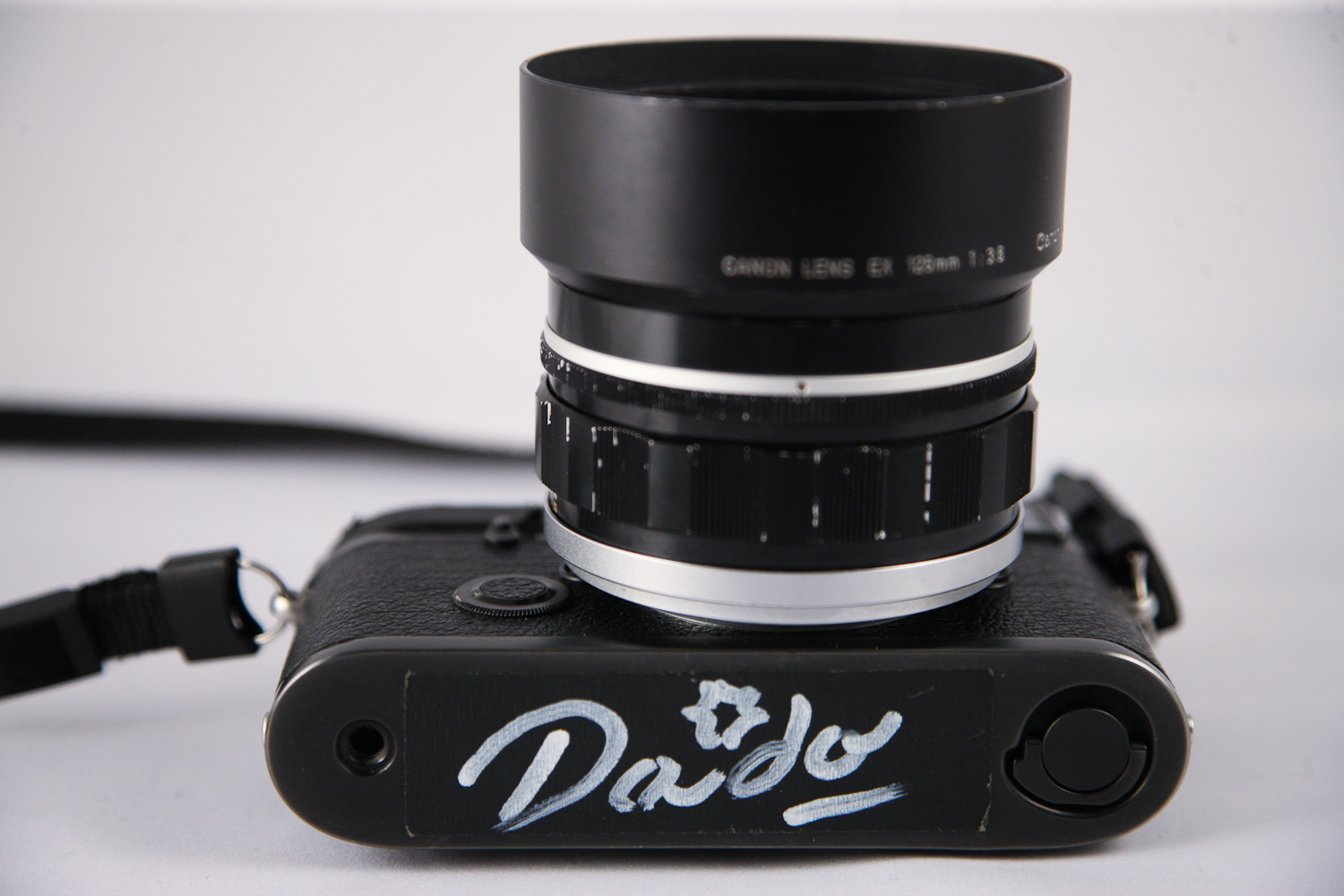
Private collection - Leica M6 with Canon 50mm f0.95, signed by Daido Moriyama. CC BY-SA 2.0. Source
.jpg)
Central to his method is the concept of are, bure, boke ("grainy, blurry, out-of-focus.") Far from technical flaws, these qualities function as expressive tools. In the darkroom, Moriyama often pushed contrast to extremes, treating the photographic process itself as an act of transformation. The image becomes less a record of reality and more a physical trace of perception.
The darkroom process was crucial for Moriyama. There, under the red light, he would push contrast to its limits, carving out details until they approached abstraction. His prints were not neutral - they were a physical act of transformation. He once said he does not take photographs - he creates them in the darkroom.
I recommend an excellent post about the Ricoh GR1s camera and street photography in the "are, bure, boke" convention - an approach to image-making closely aligned with the visual language found in Daido Moriyama's work.
I have also been using Ricoh cameras for years. In another article, I published a small selection of photographs made with a Ricoh GR from 2013, treating the camera not as a fetishised object, but as a tool that encourages speed, intuition, and direct engagement with reality.
For those interested in the history and evolution of the GR line, I also recommend the dedicated materials prepared by Ricoh:
- History of the Ricoh GR series: Ricoh GR Story
- Image galleries made with Ricoh GR cameras, including technical details: Ricoh GR Photographers
Key Works and Landmark Publications
Moriyama's output is not merely a collection of individual images - it is a body of photobooks that function as self-contained manifestos. Farewell Photography (1972) is the most radical of them, but not the only one. Hunter (1972) is a record of obsessive wandering through the streets of Tokyo - a series of images in which Moriyama tracks the city like a hunter. The title is deliberate: it speaks of tracking, of alertness, of the constant motion that defines his practice.
Other important publications include Bye Bye Photography (1970) - an experiment with photocopying and pushing the boundaries of what can be called photography - and Stray Dog (1990), which gathers key images from across his career and functions as a retrospective statement. In 2012, Aperture published the monograph Daido Moriyama: The World Through My Eyes, which introduced his work to new generations of audiences worldwide.
Legacy, Exhibitions, and Recognition
International recognition came to Moriyama gradually but eventually became widespread. His retrospectives at Tate Modern in London (2012), Fondation Cartier in Paris (2016), and SFMOMA in San Francisco cemented his position as one of the most important photographers of the 20th century.
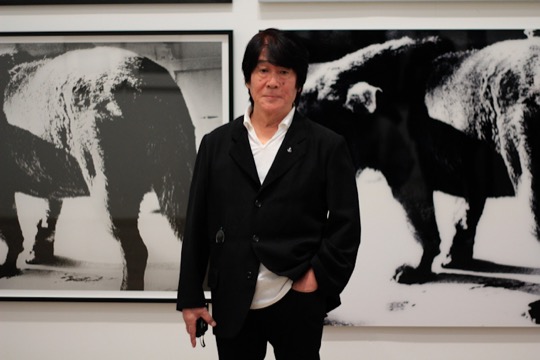
Daido Moriyama during a visit to his exhibition at Tate Modern, London, 8 October 2012. Photograph by titus_alone, CC BY 2.0. Source
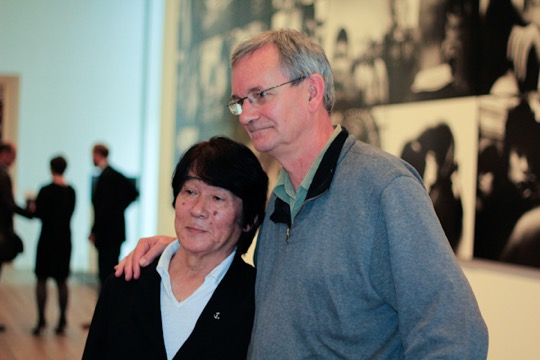
Daido Moriyama with Martin Parr at Tate Modern, London, 8 October 2012. Photograph by titus_alone, CC BY 2.0. Source
Moriyama's impact on photography is both deep and wide. In Japan, his work opened space for photographers such as Nobuyoshi Araki to explore intimacy, transgression, and the darker undercurrents of urban culture. Internationally, Moriyama demonstrated that photography could operate beyond documentation - as a form of personal language, psychological mapping, and cultural critique.
In the digital era, his influence remains strikingly relevant. Contemporary photographers continue to echo his emphasis on imperfection, fragmentation, and emotional density. In a world saturated with high-resolution imagery, Moriyama's work reminds us that intensity often emerges not from precision, but from friction and instability.
In 2016, the Fondation Cartier in Paris organised the exhibition Daido Tokyo, presenting Moriyama's work in dialogue with modern architectural space. It was one of the most comprehensive presentations of his photography in Europe.
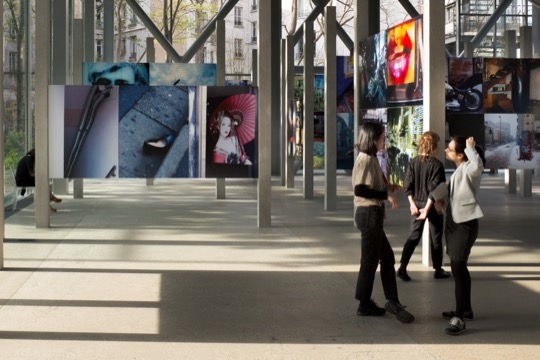
"Daido Tokyo" exhibition by Daido Moriyama at Fondation Cartier pour l'Art Contemporain, Paris, 2016. Photograph by Ssirdeck, CC BY-SA 4.0. Source

Moriyama's photography is ultimately an ongoing confrontation with the city - an endless walk through repetition, obsession, and sensory overload. By embracing imperfection and uncertainty, he expanded the expressive potential of the medium. His legacy endures not as a style to imitate, but as an attitude: photography as experience, risk, and relentless presence.
Media
This essay reflects on Moriyama's method of continuous wandering - photography as repetition, obsession, and confrontation with the everyday. The city becomes both subject and collaborator.
Further reading
Please check more publications related to Daido Moriyama on (Amazon). Thank you for visiting!
Co-created by human and AI.