Some links on this page may be affiliate links.
Red Dot Design Museum, Essen
Red Dot Design Museum in Essen
Red Dot Design Museum in Essen is one of those places where design stops being a declaration and starts working physically. Alongside Singapore, it is one of only two permanent exhibitions of this scale worldwide - less a showcase of trends, more a condensed map of contemporary design decisions.
Everyday objects are on display: furniture, household appliances, electronics, watches, jewellery. Items familiar from catalogues and showrooms, removed from their natural context and placed within a space that refuses indifference.
Early on, attention is drawn to the aluminium body shell of the Audi A8 - a raw, almost technical form suspended in the vast interior. Not as a brand symbol, but as a reminder that material innovation can be just as meaningful as visual language.
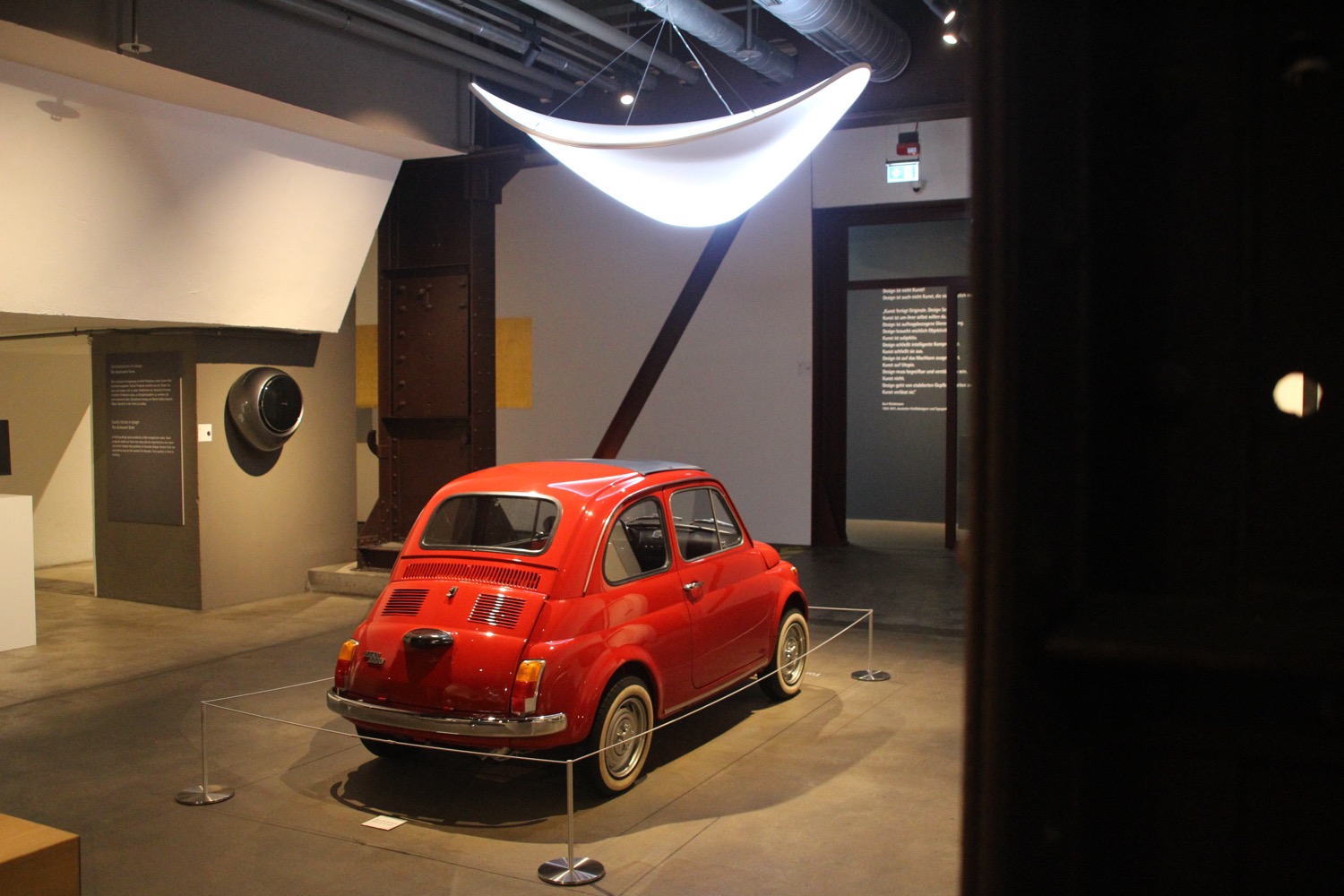
Ground floor of the Red Dot Design Museum in the former Zollverein boiler house. The historic industrial machinery and red steel trusses frame contemporary design objects, including a Fiat 500 displayed as a design classic. Photo by Wikisympathisant, CC BY-SA 4.0. Source

Essen and the logic of transformation
The museum's location is far from accidental. Essen, a city in the Ruhr region once defined by mining and heavy industry, has undergone a profound transformation. Revitalisation here does not smooth over history - it works with it.
Red Dot fits into this process quietly. It does not attempt to overwrite the past with a new narrative, but allows history to remain as a frame for contemporary objects. Thanks to this, design does not float in abstraction.
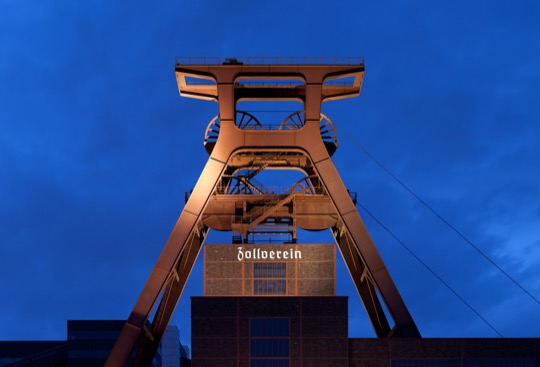
The iconic double-bundle winding tower of Shaft 12 at Zeche Zollverein, Essen. This UNESCO World Heritage site symbolises the region's transformation from heavy industry to culture and design. Photo by Thomas Wolf, CC BY-SA 3.0 DE. Source

Zollverein: architecture as a frame
The museum occupies part of the former Zollverein coal mine, specifically Shaft 12 - designed in the spirit of Bauhaus modernism. The architecture is precise, restrained, rational. And for that very reason, it accommodates design remarkably well.
At the centre of the vast hall stands a concrete core with staircases leading to external exhibition platforms. The display does not compete with the space. Objects appear at height, in semi-darkness, sometimes nearly disappearing within the scale of the interior. This tension works in their favour.
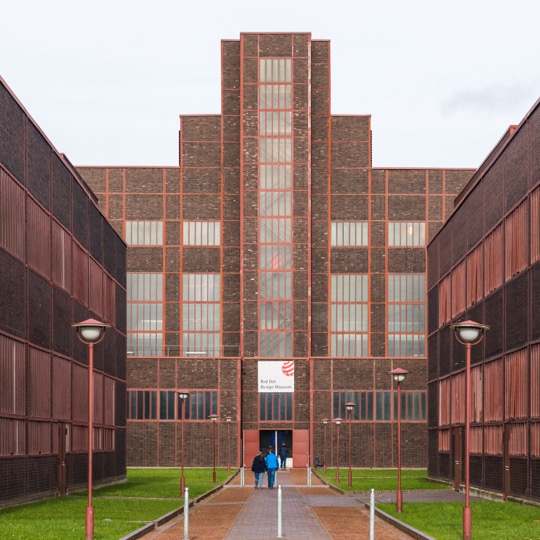
The former boiler house of Zeche Zollverein, built in 1928/29 by Fritz Schupp and Martin Kremmer in the New Objectivity style, converted into the Red Dot Design Museum in 1997 by Norman Foster. Photo by Raimond Spekking, CC BY-SA 4.0. Source

Close to objects
One of the exhibition's strongest aspects is the possibility of direct contact. You can sit in a chair, touch materials, sense proportions. A small gesture, but one that changes perspective - design stops being an image and becomes experience.
The layout is intuitive: kitchen, bathroom, furniture, electronics, lighting. Alongside well-known brands appear less obvious solutions, often surprising in function or form. The lighting sections are particularly compelling - lamps placed in darker zones of the hall function almost as spatial installations.
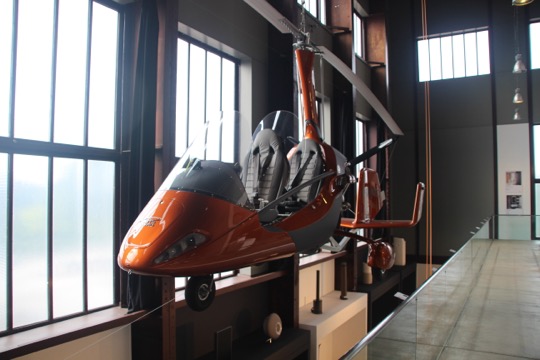
An MTOsport autogyro by AutoGyro displayed inside the Red Dot Design Museum, winner of Red Dot: Best of the Best in 2018. The exhibit shows how even functional machines become design objects in this space. Photo by Wikisympathisant, CC BY-SA 4.0. Source

Objects with a short lifespan
The section devoted to electronics and short-cycle products is especially telling. Keyboards, watches, small devices - designed for mass production. Red Dot shows that design quality does not have to be a luxury. It can be a standard, even if the object's lifespan is limited.
The quiet of ideas
At the end, a separate space dedicated to publications and posters. A concrete room where form recedes and ideas take precedence. Here, design does not seek attention - it lingers.
Instead of a conclusion
I spent nearly two hours in Red Dot Design Museum, unhurried. It is not a place that aims to impress. It works slowly, consistently, through contrast: refined objects set within the brutal architecture of a former coal mine.
Red Dot in Essen is more than a museum. It is a point where design, architecture, and the memory of a place intersect. A concentrated narrative of how an industrial past can become a frame for contemporary visual sensitivity.
If there is one reason to come here, it is this dialogue between form and the weight of space. Without spectacle. Without excess words.
Further reading
If this text caught your interest, you may want to explore publications related to Red Dot Design on Amazon. Thank you for visiting!
Co-created by human and AI.