Some links on this site may be affiliate links
Citizen Eco-Drive: A Watch That Runs on Light
Every watch I owned before this one wanted something from me.
A mechanical one had to be wound. Worn daily, it wound itself with the movement of my arm, but two days in a drawer were enough to stop it. A quartz watch carried a battery inside and reminded me about the watchmaker once every two years. That errand always felt like a waiting room: you sat at the counter and waited for someone to open the case. I never liked the arrangement. The thing that was supposed to keep my time demanded keeping.
This one seems simpler. I do not wind it or take it to a watchmaker for a new battery. It still contains a cell, though, and light has to recharge it.
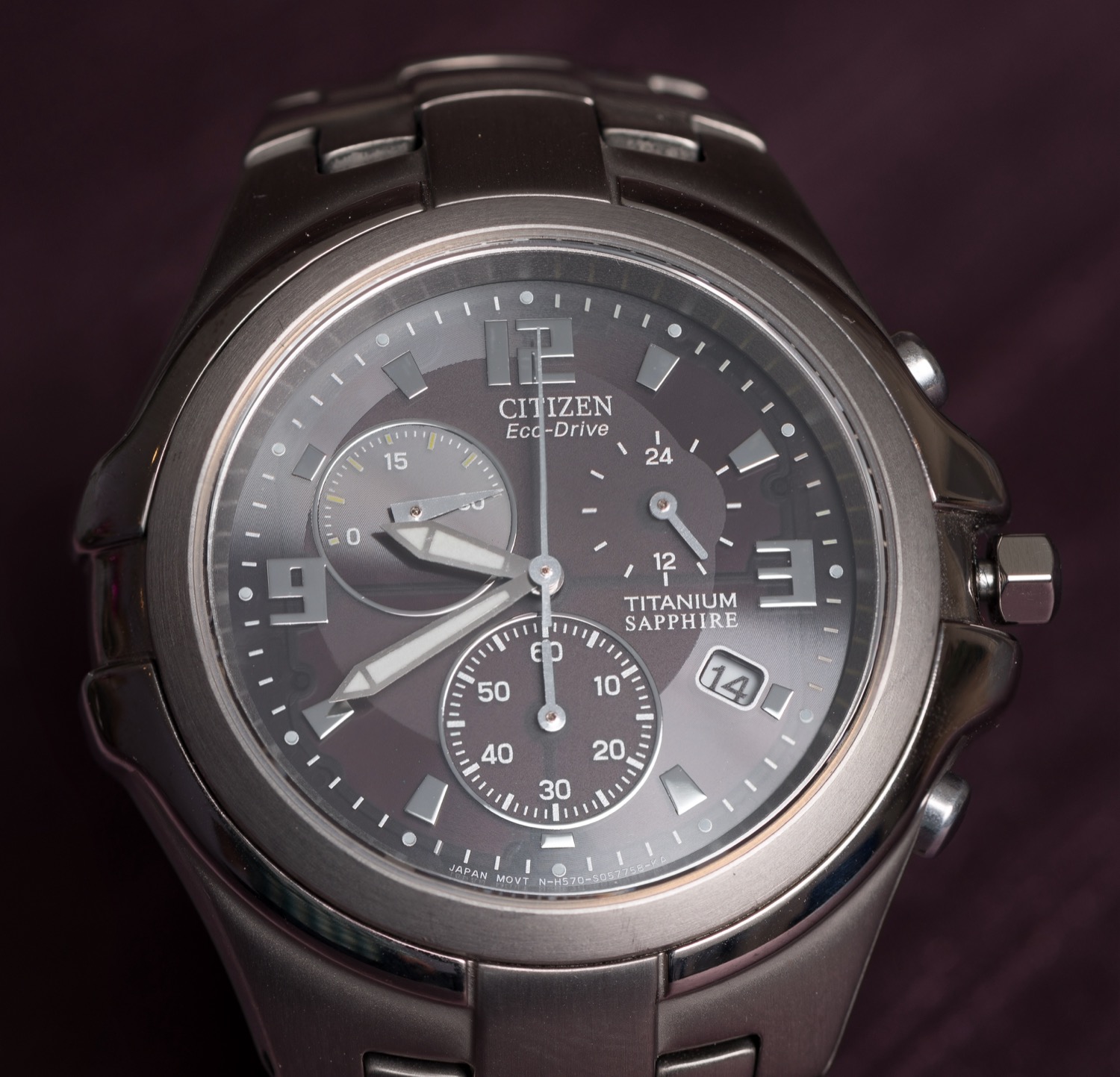
Citizen Marinaut AT1100-55F with the H570 caliber. By Tuxyso, CC BY-SA 3.0. Source

The name began as a wish. In 1924 the Shokosha Watch Research Institute released its first pocket watch. It had no name, so the institute asked Gotō Shinpei, then mayor of Tokyo, to suggest one. He chose Citizen, hoping that many people would use and cherish the watch for a long time.
The name pointed to the people who would wear the watch. The company’s history returns to the phrase “loved by citizens, working for citizens.” It sounds more like a promise than a product name.
The idea of powering a watch with light took shape during the oil crisis. In 1976 Citizen released the Crystron Solar Cell, the first light-powered analogue quartz watch. Eco-Drive became the name of the technology later on. The watch did not get rid of its cell. It stopped needing regular replacement.
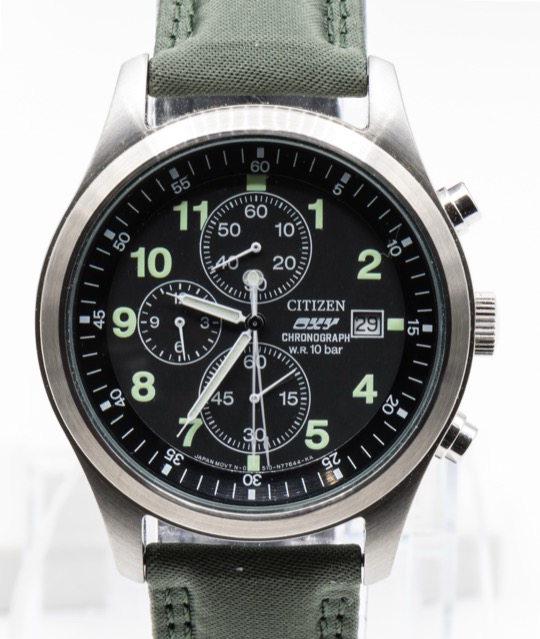
Citizen CTZ-9104, a quartz chronograph without a solar cell. By Jacek Halicki, CC BY-SA 4.0. Source

For best results, Citizen recommends exposing the dial to direct sunlight for five or six hours a month. The watch is not entirely independent of its surroundings. It simply asks for light now and then, instead of a replacement battery.
The more interesting things happen in the dial. In many models the cell sits beneath it, so the dial has to let light through while hiding the cell. Citizen describes it as translucent but not transparent. Too dark, and the light cannot get through. Too clear, and the cell shows.
You can see the choice more clearly in models with a ring-shaped solar cell. The cell runs around the edge of the dial instead of hiding beneath it.
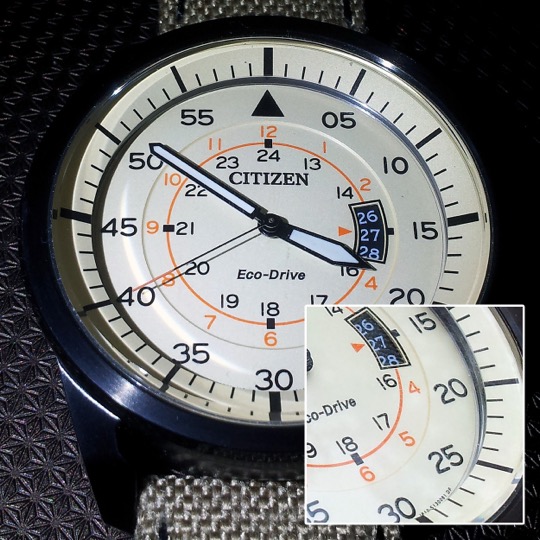
Citizen Eco-Drive METAL dial with the solar ring left visible. By Crētus, CC BY-SA 4.0. Source

Under the dial, the mechanism stays out of view. At its edge, the cell becomes part of the design. Both arrangements depend on light, but they show that dependence differently.
Some models have a power save mode. After a long time in the dark, their hands stop, though the mechanism continues to keep time. When light reaches the dial again, the hands return to the correct time. Not every Eco-Drive has this feature.
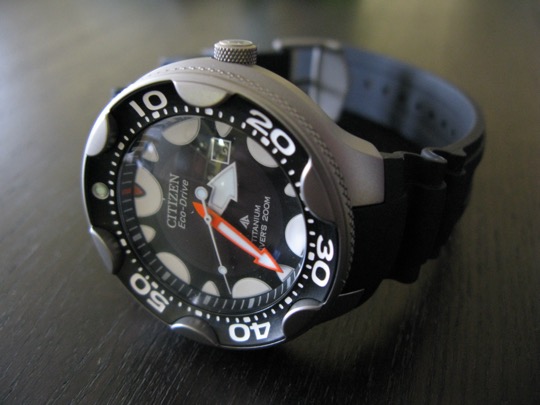
Citizen Promaster Eco-Drive BN0015-07E, Diver's 200 m, with the E168 caliber. By Guillaume Pillet, CC BY 2.0. Source

The Eco-Drive instructions offer another small sign: when the charge runs low, the second hand starts moving in two-second intervals. The watch begins to limp. You put it in the light and wait for the hand to move steadily again.
I notice it most when the watch lies by the window. I no longer have to book a watchmaker just to replace a battery. Every now and then, I draw the curtain. A small movement, enough to keep the watch going.
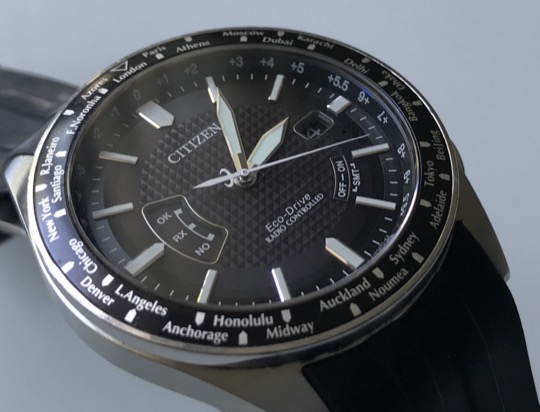
Citizen CB0021-06E with the H144 caliber. By Ocrho, CC0 1.0. Source

So even though the Eco-Drive simply works, I miss winding a watch more than I care to admit. I liked that small turn of the crown in the morning. Nothing much, but it belonged to the start of the day.
Further Reading
- The story behind Citizen's name, Citizen official site - the first pocket watch and Gotō Shinpei
- Eco-Drive, Citizen official site - how it works, the dials, power save mode and low-charge warning
- H570 caliber manual, Citizen - low-charge warning
- Crystron Solar Cell, Citizen Design - the 1976 model
- Citizen Eco-Drive watches - models currently on sale
Co-created by human and AI.